india
When a Canadian prime minister walked through mud lanes to keep India out of the Soviet orbit
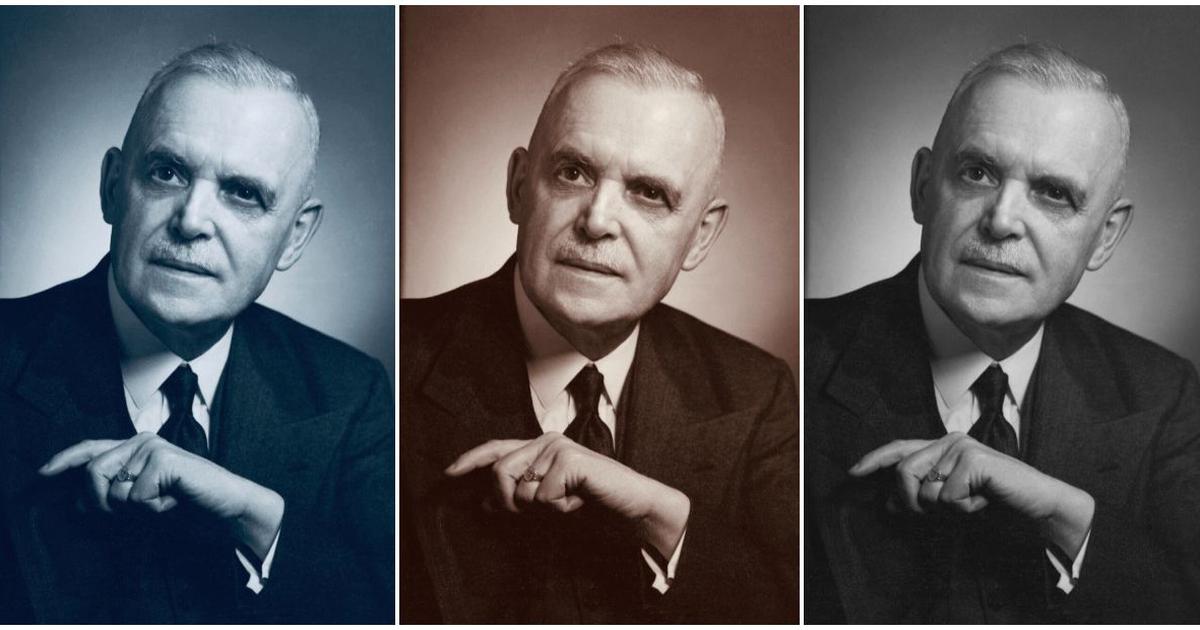
Five years after Jawaharlal Nehru travelled to Canada in 1949, Canadian Prime Minister Louis St Laurent arrived in India for a week-long visit that would leave an impression on him. From touring ancient monuments to visiting a village and addressing the Indian Parliament, St Laurent got an opportunity to see a country undergoing enormous political and social change. He would later describe it as “one of the most fruitful weeks in the whole 72 years” of his life.
The visit was part of a wider goodwill tour of three newly independent South Asian countries: Pakistan, Ceylon (now Sri Lanka) and India. It came at a time when the Cold War was intensifying and both the Western and Eastern blocs were seeking to cultivate influence in the region.
Canada, meanwhile, wanted to position itself as a development partner for these nations. It was among the founding members of the Colombo Plan, an intergovernmental organisation established in 1951 to improve living standards and promote regional cooperation in South and South East Asia. Supporting the region’s development was an important way for Ottawa to build goodwill for Canada and the Western bloc.
Much of St Laurent’s understanding of India came from his extensive conversations with Nehru. He appeared particularly impressed by what he described as a “revolution by peaceful and democratic means”, the government’s efforts to transform rural communities.
Addressing the Indian Parliament, St Laurent congratulated the country on the “magnificent results” emerging from cooperative development work in its villages. He was really impressed by a community centre he had visited. “That community centre is, to my mind, a symbol of the community interest of all of us,” he said. “I would like to see many community centres in all the nations of the world, because when we are meeting together in a community centre we realize that, although we have faults, each one of us has good qualities.”
Rural transformation
Back in Canada, St Laurent recounted his village visit to the local press in Toronto. Reflecting on the poverty faced by ordinary villagers, he described the task of raising the living standards of India’s 300 million rural inhabitants as a “stupendous undertaking”. He spoke of walking through muddy lanes and entering dark mud houses, but noted that a government-funded development project aimed at improving living conditions and boosting agricultural production was already showing “clear evidence of great improvement”.
St Laurent explained that, given the scale of the challenge, India was focusing on improving the conditions in 500,000 villages through technical assistance and the work of dedicated officials, rather than attempting to improve the lives of all 300 million villagers. “This is a lot of villages, but each of these villages is an individual community and the plan is for each individual community to do for itself what has been done in each of the improved villages,” he said.
The Canadian prime minister also recalled Nehru’s observation that the present generation would have to accept “a lifetime of hard labour”, but that its efforts would be rewarding. “The enthusiasm and determination and realistic approach of all the planning authorities, both central and local, is such as to justify the hope that these ancient nations will succeed in their war against poverty, disease and the ignorance that is widespread amongst those great masses of our fellow human beings,” St Laurent added.
St Laurent was not alone in his optimism about India’s development plans. Other prominent Canadians also believed that Nehru’s policies could help lift millions out of poverty. In the March 1954 issue of the Canadian Geographical Journal, Rev EM Bennett, a former engineer with the British Indian Army who became a Baptist missionary, published an article titled “Irrigation and India’s Food Problem”, in which he framed the era as the “beginning of a new age”. Declaring India the “acknowledged political leader in Asia”, he urged the West to “grasp this day of opportunity with sympathy and understanding” by standing with India and helping it tackle poverty.
Despite his candid observations about the difficult conditions of Indian village life, St Laurent clearly liked the country. Addressing the press in Toronto after his return, he spoke of the beauty of India’s old buildings, countryside and people. “One sees in some of the devoutly religious Asian people, serenity seldom seen in the West,” he said. “I venture to suggest that one of the best ways we can make sure that serenity becomes a more common quality than it is now is to try and understand the people of the East and treat them as we ourselves wanted to be treated.”
Soviet factor
There was another dimension to St Laurent’s visit. Beyond development assistance and diplomatic goodwill, Canada was keen to ensure that India did not drift towards the Soviet camp during the Cold War. He saw the Colombo Plan, conceived at a Commonwealth Conference on Foreign Affairs, as an important instrument for building trust between the people of India and the Western world.
St Laurent highlighted the Massanjore Dam, or Canada Dam, being built across the Mayurakshi River in present-day Jharkhand. The project was supported by Canadian funding channelled through the Colombo Plan. Other Canadian-assisted projects were also gathering momentum in India. “Torontonians will be interested particularly in a contribution of $4,500,000 to the Bombay State Transport System,” St Laurent told reporters in Toronto. “This money was spent on buses and trucks, which were shipped from Canada and which were very badly needed to permit the economic system of the area to function better.”
His conversations with Nehru and other Indian leaders had made St Laurent acutely aware of the suspicion many ordinary Indians harboured towards the West. “We in the Western world are apt to think of world affairs in terms of the free nations of Europe and North America on the one side, and the Communist-dominated world on the other,” he said. He acknowledged, however, that it was “not reasonable” to expect people in the Indian subcontinent to view international affairs through the same lens as the West.
The Canadian prime minister noted that millions of Indians had little contact with, and limited experience of, Soviet Russia. Their knowledge of North America was equally limited. What they did know, he argued, was that English was its predominant language and “that most of its people are of Western European origin”. Their historical memories of relations with Western Europeans were “not altogether happy”.
St Laurent recognised that the experience of “European domination” had left many Indians suspicious of North Americans as well. “And it is important for us to realize that the peoples of Southern Asia, because they have had so little direct experience of Russian Imperialism, Communist or otherwise, are not inoculated as we are against the false ideas and illusory promises of Communist propaganda,” he said.
He argued that South Asians were inclined to associate the whole Western world with the imperialism they deeply resented. It was therefore Canada’s responsibility to demonstrate that it wanted a genuine friendship with these countries and wished to treat their people as equals.
St Laurent believed Canada was well placed to build such relations. “Canada has a special opportunity because, like these nations, we too have emerged from a colonial status to a status of equality in the Commonwealth, and that common experience itself is a basis for mutual understanding,” he said.
Balancing act
The visit generated considerable goodwill for Canada in India. Addressing the Indian Parliament, St Laurent praised the country’s freedom struggle under Mahatma Gandhi, which had inspired other colonised nations to seek independence. “Few events of recent years have so caught the imagination of Canadians as the emergence of India and other countries of South and South-East Asia as free nations with democratic parliamentary institutions much like our own,” he said. He praised Nehru and India for maintaining a relationship with Britain based on “equality, friendship and mutual high regard”, despite the country’s colonial past.
St Laurent commended India’s active role in resolving international conflicts and contributing to global affairs. “I want you to know, too, that Canadians are grateful to India for the conscientious, active part she has been playing in international affairs,” he said. “We Canadians are glad that Mr. Nehru and other Indian leaders have found it possible to spare time from their pressing preoccupations at home to help in the solution of world problems, and that India has assigned so many able public servants in the international field.”
A year after St Laurent’s visit, Soviet Premier Nikolai Bulganin and Communist Party Secretary Nikita Khrushchev arrived in India for a much-celebrated 19-day tour. India had, in effect, managed to maintain cordial relations with both Canada, a fellow Commonwealth member, and the Soviet Union, the leader of the Eastern bloc that Ottawa opposed and hoped to keep at a distance from New Delhi.
Canada-India relations remained broadly warm over the next two decades, although they have experienced their share of ups and downs after India’s first nuclear test in 1974. Decades later, New Delhi’s partnership with Moscow remains as much of an irritant to Ottawa as it was when St Laurent visited in the 1950s.
Ajay Kamalakaran is a writer, primarily based in Mumbai. His latest book, Colombo: Port of Call, has been published by Penguin Random House.
We welcome your comments at letters@scroll.in.Source: Scroll.in
Own this text or image and want it removed? Send a removal (DMCA) request — we act on valid requests promptly.
View the original at scroll.in