india
‘The voice must do what the eye does effortlessly’: Audiobook narrator Sneha Mathan
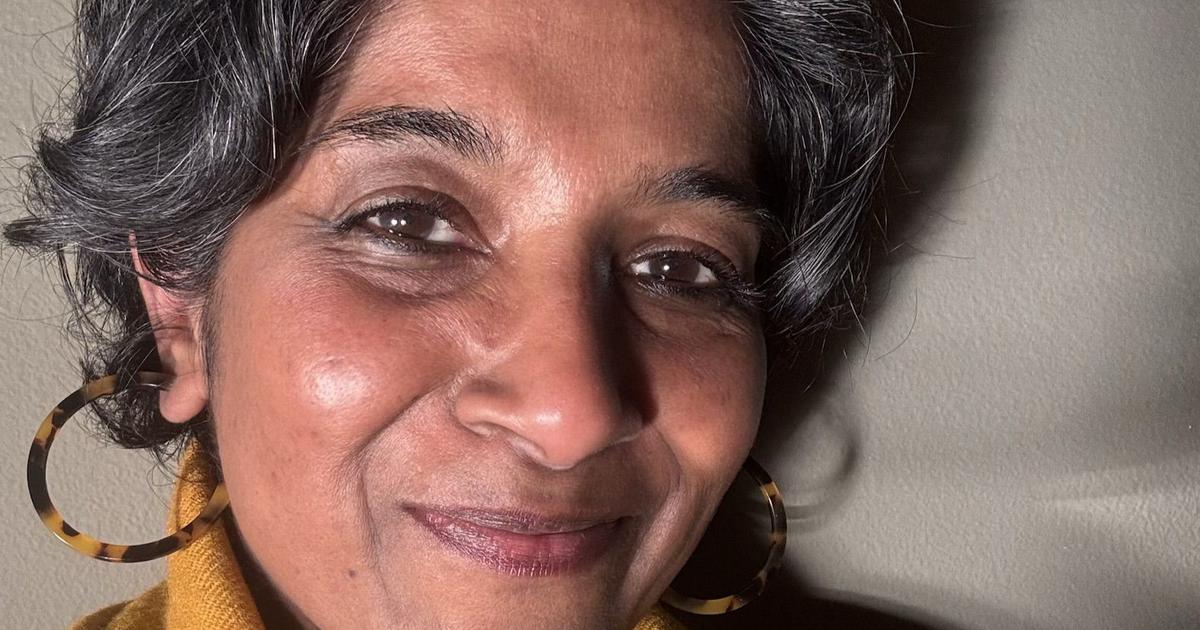
I first discovered Sneha Mathan’s voice narration in the audiobook of Kiran Desai’s Booker Prize-shortlisted novel The Loneliness of Sonia and Sunny. Over a period of three days, I listened to 25 hours and 35 minutes of narration of this multigenerational diaspora epic novel, which Desai took nearly 20 years to complete, having started writing immediately after she won the 2006 Booker Prize for The Inheritance of Loss.
In The Loneliness of Sonia and Sunny, Desai displays a fine attunement to the edges of possibility of what a novel can actually be – she firmly establishes her mastery over form and Mathan’s narration of this work left me spellbound.
I was wandering around the French countryside novel gazing, ruminating on the loneliness, panic, geographical displacement and vertigo in vast unknown spaces, the intimate trials of being in a mixed-couple relation.
Listening to Mathan’s narration, I would erupt with laughter or recoil with horror and fear as I followed the dangers that Sonia encounters as a young woman shuttling between the cultural, political and economic disparities between two worlds.
Listening to other audiobooks, I was intrigued by the narration of The Far Field by Madhuri Vijay, whose punchy and elegant short story “Lara’s Theme” recently appeared in The New Yorker. I reached out to Mathan, who lives in Seattle, to begin a conversation about her craft as a voice narration artist.
Mathan has narrated more than 85 titles from the South Asian literary canon, winning multiple accolades in the audiobook industry; her aural performances have earned her wide critical praise and made her the go-to playback voice for novels written by South Asian women.
Through extended conversations, which have been pared down, Mathan spoke about her interest in applying ideas of translation to her performance and her sound-based research in narrating South Asian women novelists, including Arundhati Roy.
It was most insightful to discover her description of good narration as Zen-like “non-performance”, where the narrator disappears into the background so that the novel can appear unmediated for the listener.
Reading is a solitary experience, and the interiority of a novel is rendered very differently through an audiobook narration. I want to begin with a point of similarity I found in two of my favourite scenes in your narrations: one is the hunting lodge scene at Sardar Samand in Kiran Desai’s The Loneliness of Sonia and Sunny, the isolation of it and your narration of the events that unfold in that eerie scene; and similarly in Madhuri Vijay’s The Far Field, when the protagonist finds herself in the tiny rented room in the house in Kashmir searching for Bashir Ahmed. Both these scenes convey the dangers of South Asian women travelling alone, in strange rooms in distant places, and to me, they are good examples to highlight how well you translate the interiority of the novel as a form through your narration. Reading is a solitary experience, but listening to you often feels like one is discovering a book together with a friend.
I like the comparison you make of those two scenes. I feel so lucky that I get to narrate works like these. Desai achieves this quality of time outside of time that you describe marvellously, often with just a few short sentences.
About feeling like we were discovering the book together, I understand that to mean that there was a freshness to the read, or a spontaneity, and I’d like to take some credit for that, but this is not something I consciously considered. As time goes on, though, I am more and more interested in getting out of the way of the text.
The need to perform the words is very seductive, and some passages do call for it, but I want to be spare with my narration, so that one hears the writing. It’s a bit like the idea of painters who must deconstruct what they know, in order to return to painting like a child: with spontaneity and abandon.
One of the first things you mentioned was Jhumpa Lahiri’s writing on translation, “In Praise of Echo”. It reminded me of the essay “Echo” by the academic Gayatri Spivak, in which she speaks about the politics of translating stories from South Asia, what she calls subaltern stories. Could you tell me what echo means to you as a voice narrator translating written text?
In her extended essay published in Translating Myself and Others, Lahiri describes Ovid’s myth of Echo and Narcissus and how it works beautifully as a metaphor for translation. In the myth, Echo, who is known for her voice and storytelling, is cursed, condemned to only repeat the words of others. Lahiri studies the many ways in which Echo’s perceived boundedness and passion parallel the translator’s role.
There was so much in the essay I resonated with as a lover of language and as someone who lives between worlds, but Lahiri’s essay also showed me how fitting a metaphor Echo was for an audiobook narrator.
The narrator, a storyteller like Echo, is of course bound by the text and devoted to it. And the narrator must listen to the author’s words to effectively animate them into sound. I do this literally, usually reading the text aloud several times, annotating it for intonation, parsing, and pronunciation.
But like the translator and Echo in Lahiri’s essay, the narrator also is one who renders, not merely one who repeats. Context often makes plain which words carry a sentence, but in the process of converting it into sound, I must intuitively or intentionally choose where the voice is sustained, where it lands, what must not be belaboured, how to differentiate characters, and how to interpret the work. Here, a narrator’s individuality, imagination, and specific skills come into play.
What were your favourite parts of narrating The Loneliness of Sonia and Sunny?
I can think of sections I really enjoyed narrating; Babita leapt off the page with her outrageousness; the Ravi-Rana sections were gruesome and fun. You can probably hear how much I enjoyed saying all the alliterative flourishes: “Chiki-Chika” and the “haha hoho” crowd.
I was moved by Desai’s scenes with Papa, and as a Malayalee myself, I appreciated the quick appearance of the Malayalee nurses. Desai creates such an immersive sense of place, so that, like Sonia, I too felt that Italy was “true”, as were Mexico and Goa. I loved revisiting places I’d lived in through Desai’s words, like New Delhi of a certain era, and lovely, moody Landour, Mussoorie.
Desai writes spectacular, witty paragraphs that travel the world before they furl. A great deal of colour and information is being conveyed in the nested clauses. In translating the work into sound, the voice must do what the eye does effortlessly and hold a note, a thought, put a pin in vocally, as it were, while the passage goes on its delicious side quests before it returns. This was very difficult for me to render correctly.
Your research on sound, dialogue, and delivery seems close to enacting a novel for a radio show or adapting a novel into a film screenplay. So much of your narration depends on timing, the space between sentences, inflexions, accents, and dialogue, and even strategic uses of silence. I also want to ask about listening to the text.
The author provides a good deal of stage directions and acting notes in the text itself that help a narrator fill in technical details like tone, timbre, emotion, speed, etc. In print, that layer of the book stays just below the surface, secondary to other aspects of the text. So, animating that with sound helps build a bridge, lifting that layer. The narrator’s own personal history, creative expression, and preparation also form a bridge.
My research spreadsheet for Sonia and Sunny was very long. Part of that was pronunciation research, which I am very particular about, but in the search for authentic, primary sources I also found so many videos that brought me right into these spaces, such as the mansions of Goa, or the desolation around Sardar Samand. So then when I’m narrating the hunting lodge scene at Sardar Samand, or reading about Babita wandering through the Portuguese mansion, my brain helpfully adds these visual references. By the time I’m in the booth, I’ve spent many days researching words, names, places, and context.
The research sounds very generative. Can you tell me more about narrating the hunting lodge scene at Sardar Samand, and how emotions, fears, and hallucinations are rendered so vividly in your narration of Desai’s novel? How did you work through these elements?
How interesting. My first reaction to your question was that I remember feeling strong emotions in other sections of this book, not so much this one. But no, I do remember the desperation in the hunting lodge scene and the panic. That feeling of being in the middle of nowhere and being utterly alone during and after what happened to Sonia. What I can say is, I knew the taste in Sonia’s mouth, I knew what she was smelling, I knew what was happening to the air in her lungs – all of that was given to me in the text. So, if I get out of the way, you’d be hearing the writing.
I think that’s part of why your narration is so good: you assess what is needed from the narration very intuitively. To end, I want to ask you, among the many books in the South Asian canon you have narrated, which one is most memorable for you?
I truly feel grateful to every author who requests me as a narrator for their book. It is a tremendous compliment. There are many excellent books I want to mention, and my list started to become long.
So instead, I will share one that changed the way I narrate: Arundhati Roy’s The God of Small Things. This was an unbelievable career high. There’s nothing I can say about this book that hasn’t already been said. I was beside myself at getting to do it. Roy asked that the book be read as though I was reading it to one person, without theatre. She talked to me about the use of accents in audiobooks, in a way that changed how I narrated subsequent books. And what a joy it was to get to do a book set in Kerala. I hope more books by Malayalee authors find me.
We welcome your comments at letters@scroll.in.Source: Scroll.in
Own this text or image and want it removed? Send a removal (DMCA) request — we act on valid requests promptly.
View the original at scroll.in