india
‘The activities of the RSS were a clear threat to the state’: What Sardar Patel told SP Mukherjee
The actions and propaganda of Hindu communalists in the months after Partition leading up to Gandhiji’s murder were not a mere threat to law and order. They constituted a challenge to the very nature of the Indian state. The government communiqué dated February 4, 1948, declaring the RSS unlawful, stated
“It has been found that in several parts of the country, individual members of the Rashtriya Swayamsevak Sangh have indulged in acts of violence involving arson, robbery, dacoity and murder and have collected illicit arms and ammunition. They have been found circulating leaflets exhorting people to resort to terrorist methods, to collect firearms, to create disaffection against the government and suborn the police and the military.”
Gandhiji refused to be taken in by Golwalkar’s attempts in 1947–48 to convince him that the RSS stood for protecting Hinduism, not for killing Muslims. When a Gandhian worker present at the meeting praised the good work done by the RSS in the refugee camp at Wah in North West Frontier Province, Gandhiji remarked: “But don’t forget even so had Hitler’s Nazis and the Fascists under Mussolini.” The eminent Gandhian, Dr Sushila Nayyar, reiterated Gandhiji’s remark when she appeared as witness no. 53 before the Kapur Commission: “They are like the Black Shirts, like the Fascists and the Nazis.”
Sardar Patel pointed out to Shyama Prasad Mookerjee, “The activities of the RSS constituted a clear threat to the existence of Government and the state.” Nehru described the RSS as not only “an injurious and dangerous organisation” but “fascist in the strictly technical sense of the word.” His fortnightly letter to the Chief Ministers, dated December 7, 1947, dealt at length with the threat posed by the RSS: “The RSS is an organisation which is in the nature of a private army and which is definitely proceeding on the strictest Nazi lines.’
He pointed out the resolutions passed by the Congress at its annual session in November 1947: “They make clear that we cannot compromise our ideals because communal organisations are, for the moment, shouting a great deal, and influencing public opinion. They issue a grave warning against private armies.”
In a broadcast over All India Radio after Gandhi’s assassination, Nehru addressed his people, “We have to hold together and fight that terrible poison of communalism that has killed the greatest man of our age.”
Jawaharlal Nehru summed up the positive changes in the polity precipitated by Gandhiji’s assassination: “Remarkable changes in our political structure have taken place in the six months that have gone by. The Hindu Mahasabha, as a political organisation, has liquidated itself. The RSS has been banned and the reaction to this throughout the country has been good. The UP Parliamentary Muslim League has also liquidated itself and I think we may look forward to the gradual disintegration of the Muslim League in India as a political organisation without any external pressure from government. These events have, of course, been precipitated by the assassination of Gandhiji, but they indicate a wholly healthy development in our political life. They are necessary steps to the creation of what we have been ceaselessly trying to achieve, viz, a democratic secular State.”
Sardar Patel, addressing Golwalkar, said, “Even an iota of the sympathy of the Government or of the people no more remained for the RSS. In fact, opposition grew. Opposition turned more severe when the RSS men expressed joy and distributed sweets after Gandhiji’s death.”
Gandhiji’s murder horrified those who had sympathised with the Hindu communal way of thinking. A close associate of Gandhiji wrote: “For months the Muslim minority throughout India was safe from molestation. The RSS by destroying the Mahatma, had given the country the shock it needed. Those who had been angrily criticising him now saw the tragic consequences of their own short-sighted anger. They knew that he had been right.”
Not so the RSS and Hindu Mahasabha. Those who go about righting older perceived historical wrongs, forgetting that two wrongs do not make a right, have not expressed regret for this act, let alone done any penance for it.There was some immediate hypocritical denunciation of the act by the RSS. The Sangha Chalak of the Rashtriya Swayam Sevak Sangh, Bombay, stated, “We have already condemned the dastardly and cowardly attack on Mahatma Gandhi’s life and we mourn this national calamity. We are observing national mourning by closing our centres for 13 days.” Savarkar claimed that “the news of the assassination of Mahatma Gandhi was too shocking and sudden”; he appealed to the “people to stand by the Central Government of Free India and maintain order in the country.”
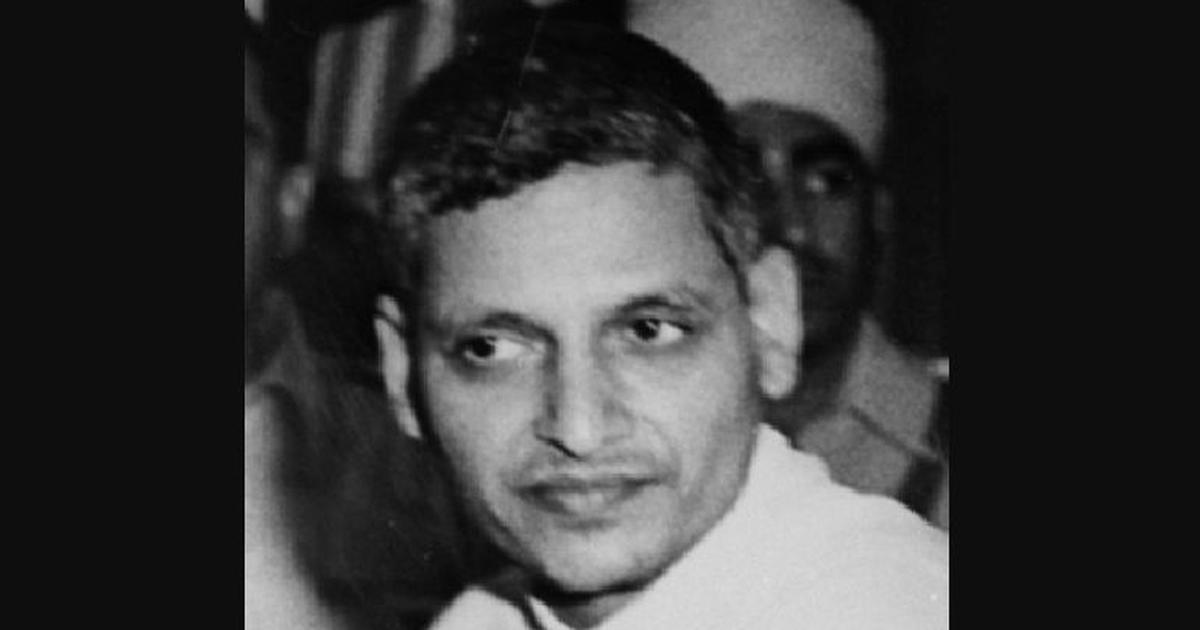
Godse continues to be glorified, Gandhi vilified and Savarkar selectively remembered as a revolutionary. Portrayal of Nathuram Godse as a martyr goes back to a decade after his execution, when his family members invited leaders of the Hindu Mahasabha on the occasion of his death anniversary, November 15, 1959, with this very intention.
Sixteen prominent Hindu Mahasabha and RSS workers, including NG Abhyankar, paid tributes to his memory. Earlier, the family would observe 15 November 1949, his death anniversary, as a private function. On November 15, 1960, GV Ketkar and others paid tribute to Godse’s memory. In November 1961, the Hindu Mahasabha, Poona, passed a resolution to observe the day as “Hindustan Day” and organised a public meeting attended by about 200 workers. The anniversary was observed in 1961, 1962 and 1963 wherein Nathuram Godse was depicted as a martyr.
Glorification of Nathuram Godse intensified with the release of his brother, Gopal and co-conspirator, Karkare. They were felicitated at a meeting organised at Poona on November 12, 1964. Soon after, a meeting was held to mark Nathuram Godse’s death anniversary. One hundred and twenty-five to 150 persons were present, and speeches eulogising his action were made. The Poona public were so incensed at the news of this meeting that the principal speaker, GV Ketkar, was abused, mobbed, garlanded with shoes and declared a traitor.
On May 16, 1991, Bal Thackeray, leader of the Shiv Sena, then an ally of the BJP, addressing an election rally in Pune, said, “We are proud of Nathuram. He saved the country from a second partition…Nathuram was not a hired assassin. He was genuinely infuriated by Mahatma Gandhi’s betrayal of the nation.” A foundation in memory of Godse was proposed at the meeting to commemorate his death anniversary in 1991.
A meeting was held in Bombay on November 19, 1993 in a hall in the Patil Maruti temple in Dadar, a suburb of Bombay. The programme was organised in honour of Gandhi’s assassin, Nathuram Godse. His younger brother, Gopal Godse, one of the accused in the Gandhi Murder Case, read out Nathuram’s call for the creation of Akhand Bharat (undivided India). This land would include Pakistan and be a Hindu Rashtra. The audience repeated the lines, which were in Sanskrit, solemnly, as if they were taking an oath.
The speeches were full of hatred, fanaticism and glorification – hatred of Gandhiji, admiration for Nathuram Godse and communal venom. One of the speakers was SG Shevade, honoured as Dharmabhushan by the Shankaracharya of Sankeshwar. Shevade’s hailing of Gandhiji’s murder drew loud applause. Gopal Godse asked the audience to donate liberally for the task of “liberating the Sindhu River by bringing Pakistan under Hindu Rashtra”. He explained that the Sindhu was sacred to the Hindus because the Vedas and holy books were composed on its banks. Moreover, Nathuram Godse had wished that his ashes should be immersed only in the Sindhu – he had said in jail that all the other rivers were polluted with Gandhi’s ashes.
Gandhi was described as the father, not of India, but of Pakistan. The day of his killing was termed a day of celebration. Gandhi’s assassination was termed as vadh, the killing of an asura, demon, by all the speakers. Gandhi was called a traitor, while Nathuram Godse was hailed as a national hero who, by killing Gandhi, saved India from another partition. Otherwise, another Muslim nation would have been created out of some parts of India – according to a plan of the Nizam of Hyderabad, which allegedly had Gandhi’s backing.
Gandhi was described as a “fanatic” and “bloodsucker” who had the blood of innocent Hindus on his hands. One of the speakers declared that the only way to stop the massacre of innocent Hindus was to massacre innocent Muslims.
In 2002, when the BJP-led coalition government was in power at the Centre, a major newspaper reported that, “Britain’s Sangh Parivar celebrated India’s Independence Day today by resolving to ‘advocate Godse’s outlook and action’ and challenge every anti-national Mulla-Commie”. The report also noted that in an email to parivar members, Bipin Patel, a hard-core Hindu activist and believed to be close to the then Deputy Prime Minister, LK Advani, warned that: “every drop of blood needs to be avenged. And we are ready at any cost…We see the merit in Gandhi’s (sic) but only after all theology-inspired terrorists are reduced to dead meat. Till that goal is achieved, we advocate Godse’s outlook and action. And if in the meantime a Gandhi comes to create hurdles in the way, then that Gandhi would need to be put out of the way.”
Excerpted with permission from India’s Descent Into Communal Fascism: From the Murder of Mahatma Gandhi to the Purging of School Texts, Aditya Mukherjee, Sucheta Mahajan, and Mridula Mukherjee, Speaking Tiger Books.
We welcome your comments at letters@scroll.in.Source: Scroll.in
Own this text or image and want it removed? Send a removal (DMCA) request — we act on valid requests promptly.
View the original at scroll.in