india
Rs 35L health cover, but 76 year-old’s Rs 3.87L claim rejected; what happened next
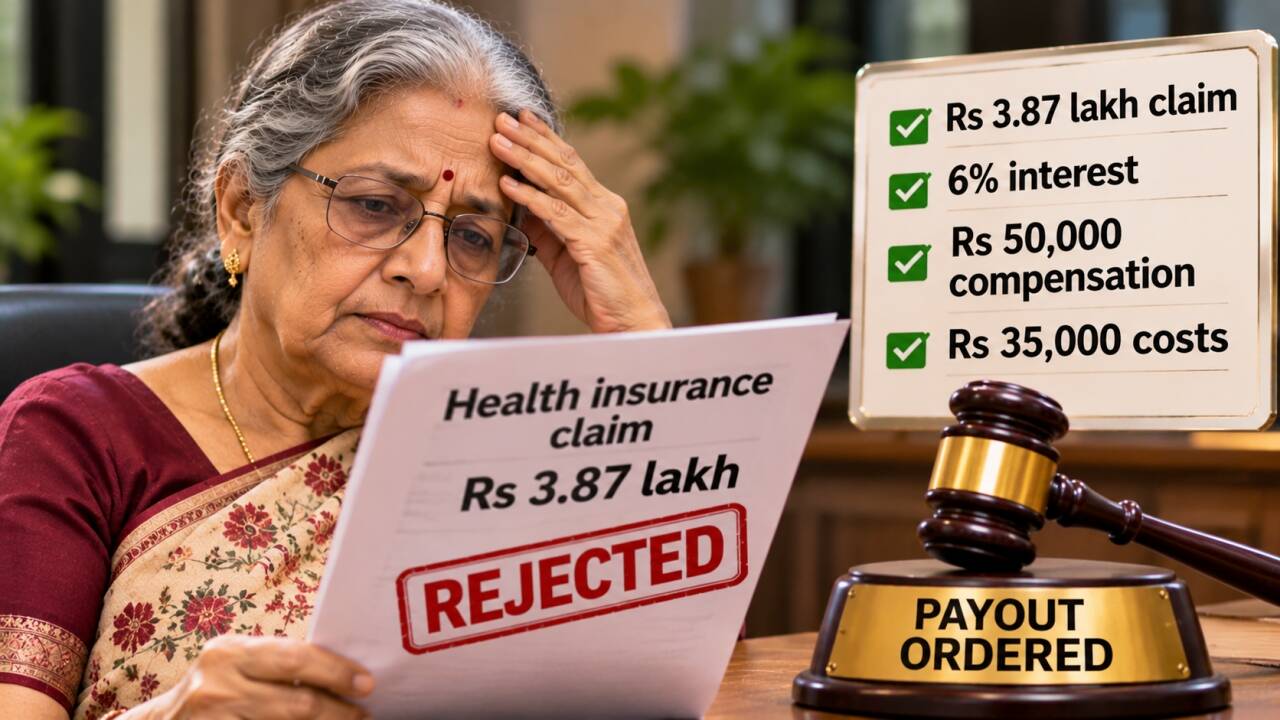
According to the woman, she had disclosed her existing medical conditions, including diabetes, lipid disorders and hypertension, while obtaining the policies. (Image for representative purpose only)
You have health insurance policies, but when you are hospitalised a wrong ailment is erroneously recorded in your charts, which the hospital later rectifies. But the insurance company rejects your claim for non-submission of mandatory documents, even though medical records had clarified the erroneous reference during the hospital admission.
What do you do?In one such case, a 76-year-old woman had to pay Rs 3.87 lakh for her hospital treatment despite holding health insurance policies with a combined sum insured of Rs 35 lakh.The District Consumer Disputes Redressal Commission-VIII (Central), Delhi, held Nthe insurance company guilty of deficiency in service over its handling of the claim.In its order dated September 24, 2026, the commission found that the insurer continued to seek medical clarification despite records showing that the erroneous entry had been corrected during the same hospital admission.
What the case is about
A woman held two health insurance policies - the first provided a sum insured of Rs 10 lakh against a premium of Rs 96,673. The second carried a sum insured of Rs 25 lakh and involved an additional premium of Rs 54,499.According to the woman, she had disclosed her existing medical conditions, including diabetes, lipid disorders and hypertension, while obtaining the policies. She also stated that the insurer had conducted a pre-policy medical examination, whose report did not record any pre-existing disease relating to her heart or kidneys.
In December 2023, she was admitted to the emergency department of a hospital in Delhi. The initial emergency assessment inadvertently recorded chronic kidney disease (CKD). The woman maintained that this entry was erroneous and was corrected through an addendum, before she was discharged.During her hospitalisation, a cashless claim request was submitted to the insurance company. The insurer sought additional medical records, investigation reports and clarifications.
The woman stated that she supplied the requested information, including a treating doctor's certificate indicating that she had no history of CKD or coronary artery disease.The cashless request was nevertheless not approved, with the reason communicated being insufficiency or non-submission of the requisite documents. After being discharged, she paid the hospital bill of Rs 3.8 lakh herself and subsequently filed a reimbursement claim.The insurer acknowledged the reimbursement claim in January 2024, and sought hard copies of the original documents. It continued to request information over the following weeks. In February, it confirmed receipt of the physical documents and informed her that the claim was under hospital-level verification.Towards March-end, the insurer again sought an affidavit from the treating doctor confirming that there was no history of CKD.The woman argued that this was unnecessary because the hospital had already clarified the erroneous entry through the addendum and a medical certificate. According to her complaint, the treating doctor also explained that a separate affidavit from the emergency doctor would not be provided because the error had already been corrected in the medical record.The insurance company rejected the reimbursement claim by email in April 2024, citing non-submission of mandatory documents.The woman then approached the consumer commission, seeking reimbursement, interest, compensation and litigation expenses.The insurer did not file its written version within the statutory period. By an order dated May 29, 2025, the commission closed its right to file the written version and evidence. It subsequently considered the insurer's written arguments only on questions of law, not disputed factual matters that should have been presented through its written version and evidence.
Why the court ruled in favour of the woman
The commission examined the medical records and correspondence between the parties, focusing on whether the insurer had acted reasonably in processing and rejecting the claim.It noted that the initial emergency assessment mentioned CKD, but the addendum correcting the entry had been issued during the same hospital admission. The treating doctor's clarification and other records were also available to the insurer.The commission observed: “The significance of the correction is that the alleged discrepancy was not discovered for the first time after the claim had been raised.”It further noted that the insurer had been informed about the correction and had received the treating doctor's clarification, yet continued to seek an affidavit addressing the same issue.The commission recognised that insurers can request documents to verify claims.
However, it held that this right cannot justify repeated demands for material already supplied or documents that cannot reasonably be obtained in the circumstances.As the order stated: “However, such right cannot be exercised in a manner whereby the insured is repeatedly called upon to furnish documents which have already been supplied or documents which, in the circumstances, are not reasonably capable of being obtained.”The commission also observed that the insurer had not produced evidence establishing what essential information remained unavailable after the medical documents and clarifications had been furnished.Its February communication, confirming that the case was under hospital-level verification, indicated that the claim was being processed on the basis of the submitted documents.The order said: “In these circumstances, the subsequent rejection of the claim merely on the ground of non-submission of further documents, without satisfactorily establishing why the documents already supplied were insufficient for adjudication, amounts to an unreasonable handling of the insurance claim.”The commission also referred to the Supreme Court's decision in Manmohan Nanda v. United India Assurance Co. Ltd., noting the principle that an insurer that conducts a pre-policy medical assessment must assess the medical risk on the information available to it.
Concluding that the claim had not been processed and decided fairly, reasonably and diligently, the commission held that the insurance company had committed deficiency in service.It stated: “The Commission is therefore of the considered view that the Opposite Party failed to process and decide the complainant’s claim in a fair, reasonable and diligent manner and thereby committed deficiency in service.”The commission directed the insurance company to pay the reimbursement amount, interest, compensation and litigation costs within 45 days of receiving the order.The commission directed the insurer to reimburse the hospital expenses of Rs 3,87,391, pay interest at 6% per annum from April 25, 2024, until realisation, and provide Rs 50,000 as compensation for mental agony, harassment and inconvenience. It also awarded Rs 35,000 towards litigation expenses.If it failed to comply with the monetary directions within that period, the principal reimbursement amount would carry interest at 9% per annum instead of 6%, calculated from April 25, 2024, until actual realisation.
Source: The Times of India
Own this text or image and want it removed? Send a removal (DMCA) request — we act on valid requests promptly.
View the original at timesofindia.indiatimes.com