india
Letter from Brazil: How ‘Lula’s army’ beat the social-media algorithms to pull off a startling win
In October, I flew back home to Rio de Janeiro to vote in the first round of the presidential election – and I was afraid. The Bolsonaros could well return to power. Rio is where Bolsonarism began, and the family’s ties to the militias, gangs of serving and former police officers who took over much of the city’s politics, were known there long before the rest of Brazil paid attention.
On October 4, Senator Flávio Bolsonaro won the first round, with 47.03% of the valid votes. He is the eldest son of Jair Bolsonaro, who was president from 2019 to 2022. A former army captain who speaks fondly of the 1964-1985 dictatorship, Jair Bolsonaro was convicted in 2025 of plotting a coup. Barred from running, he handed his votes to his son.
The incumbent, Luiz Inácio Lula da Silva, had 45.16%. Since 1989, no candidate who had come second in the first round had gone on to win the runoff.
In the days after the first round, I joined the marches that students had organised. Many of us thought it was already too late to change the result. As we walked through central Rio, the students shouted up at the office windows, asking the people inside to come down, or at least to wave.
“Worker, look over here, I’m out in the street so your child can study,” they chanted. Under Lula’s governments, affirmative action, new public universities and campuses in the interior have changed who goes to university in Brazil. Lula himself has said that when he retires from politics he would like to go to university.
Back at work in the Netherlands after the first round, I could only follow on a screen. For three weeks, I spent most of my free time on a WhatsApp channel with more than ten million other people, trying to reach beyond those who already agreed with us.
For a decade, social networks had served the far right better than anyone. However, in those weeks in Brazil, social media filled up with people from the other side learning – often with a lot of humour – how to use them effectively.
Philosopher Daniel Bensaïd used to say that there are moments when political time speeds up and things that look settled start to move. Those three weeks in Brazil were like that. The victory was put together in layers, by people who mostly never met.
Flavio Bolsonaro surpassed President Luiz Inacio Lula da Silva in a first-round vote in Brazil, receiving 47% of the votes.
Flavio is the eldest son of former far-right president Jair Bolsonaro and was chosen by his father to continue the family's political project.
The two… pic.twitter.com/Soqy7wrpMr
— Scroll.in (@scroll_in) October 5, 2026
It wasn’t just Flavio Bolsonaro who did well in the October 3 election. Bolsonaro’s far right Liberal Party won 121 of the 513 seats in the Chamber of Deputies, the largest bloc any single party has held since 1988, and will have 28 of the 81 senators.
One of the new faces is Eduarda Campopiano, 23, a state legislator in São Paulo from the Liberal Party. She calls herself the greatest enemy of feminists and has declared femicide does not exist.
A far right that loses the presidency but controls Congress can block social spending and put pressure on the Supreme Court judges who tried Jair Bolsonaro. Only the Senate can remove them.
Amazingly, 21 days later Lula won with about 51.7% of the vote. Abstention fell from 21.08% to 19.21%, which meant almost three million more people voted in the run-off than in the first round.
🇧🇷 Thousands of people join a student march in downtown Rio de Janeiro to protest against election favorite Flavio Bolsonaro and the prospect of the far-right's return to power in Brazil, as the campaign for a presidential runoff swings into actionhttps://t.co/o6SAxe4OXt pic.twitter.com/CZBNLEw3sq
— AFP News Agency (@AFP) October 7, 2026
It started at a law school. The day after the first round, more than a thousand students from the Federal Fluminense University in Niterói marched through the city. Thousands more followed in Rio, and then in at least 13 states. Many of these students are the first in their families to study at university, thanks to quotas and the federal universities opened under Lula’s Workers’ Party – or PT, in Portuguese.
The marches had their own celebrities. On Avenida Paulista in São Paulo, a shirtless young man in tracksuit bottoms and a red balaclava, waving a Palestinian flag, became known as “o gostoso da Paulista”, the hottie of Paulista. Within days there were masked imitators in other cities.
Older people came too, although voting is optional after 70. Some remembered the dictatorship. Others remembered what the PT’s cash transfers, housing programmes and scholarships had meant for their families.
Indigenous communities voted in large numbers. Their alliance, the APIB, had endorsed Lula while complaining that the demarcation of their lands was moving far too slowly against the agribusiness lobby.
With a Flávio Bolsonaro government threatening their territories, they went to vote dressed in red, on foot, by motorbike and by boat.
The Bolsa Família came up again and again. The Bolsa Família (“family grant”) is Brazil’s main anti-poverty programme. The government pays money directly to low-income families each month, on the condition that they keep their children in school and up to date on health check-ups.
In a video that reached Lula’s official profile in September, a woman from the semi-arid Northeast sits at the table with her son, who had told her that Lula had never ended hunger. She tells him what she ate as a child: cassava flour mixed into coffee, the fruit of the palma cactus, mandacaru.
She also talks about walking far from home for water, before the rainwater cisterns were built. Lula replied in the comments that three meals a day for every Brazilian had always been his obsession.
The money is not much by Brazilian standards – a minimum of around Rs 13,000 a month per family since October. Since the programme began in 2003, though, it has been paid primarily to the mother. Women hold 84% of the programme cards – and about three-quarters of them are Black or mixed race.
Brazil has more than 11 million families headed by mothers raising their children alone. About 1.7 million children born since 2016 have no father’s name on their birth certificates.
Putting the money in the mother’s name meant recognising who was already running the house. It also gave her an income no partner could take away, on the condition that the children stayed in school and were vaccinated.
Let us discover the true size of Lula’s army. pic.twitter.com/hQTJZecoGZ
— Snoopy fans (@snoopy1060605) October 25, 2026
The marches started in red. Yellow came later. For ten years, Bolsonaro supporters had worn the national football shirt as a uniform. André Janones, a 42-year-old congressman from Minas Gerais and the son of a domestic worker, wanted it back. So did students at the Federal University of Minas Gerais. On October 17, members of “Lula’s Army” started posting photos of themselves in yellow, making an L with their fingers.
Brazilians who didn’t own a Brazilian football shirt used AI to slap it on themselves – and on their dogs, parrots and even capybaras. It was funny, and it also confused the social meia algorithms, which could no longer tell the two camps apart. This let the posts travel further.
The social-media platforms did not treat both sides the same. Meta took down the Lula campaign’s advertising account, stopped it from promoting posts for two days. It offered an AI tool that refused to make images of Lula – but kept creating Flávio Bolsonaro pictures. When Brazil’s electoral court ordered equal treatment, Meta blamed this on technical problems.
Much of the Brazilian and foreign press repeated Flávio Bolsonaro’s description of himself as “the more moderate Bolsonaro” and covered the runoff as a contest between two equivalent extremes. Treating them as equivalent helped make the far right look normal.
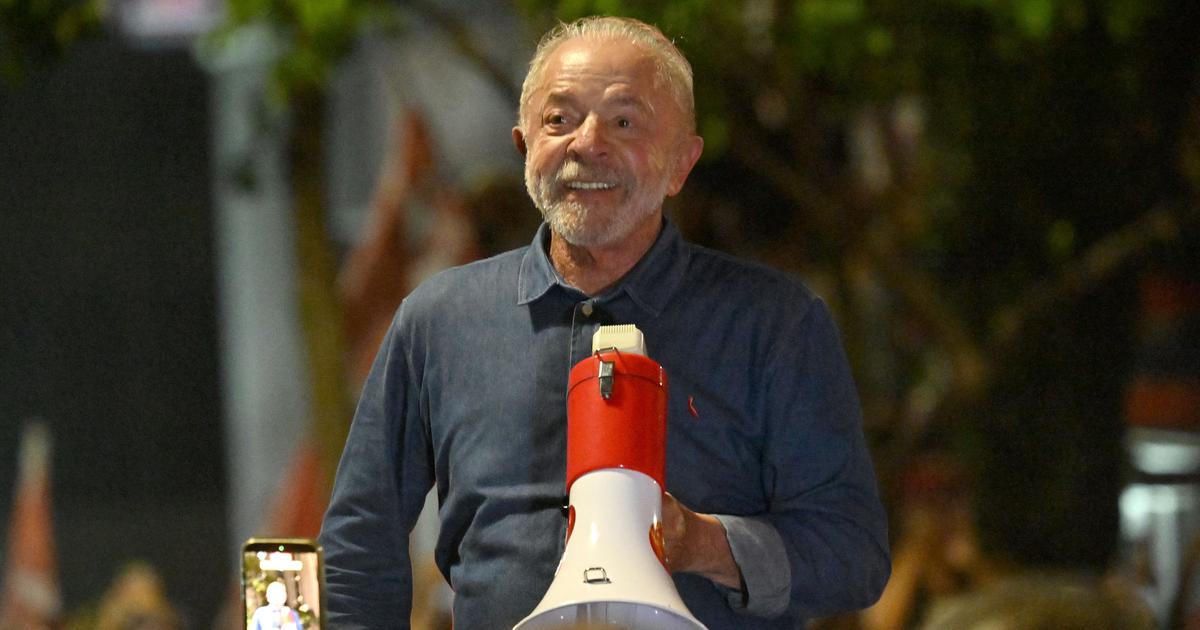
Jair Bolsonaro won in 2018 partly thanks to disinformation on WhatsApp, a phenomenon Indian readers will know well. This time, WhatsApp also worked for the other side, largely because of Janones, who campaigned for Lula loudly and cheerfully. His WhatsApp channel, “Exército do Lula” (Lula’s Army or Infantry), went from 50,000 followers to more than ten million in three weeks from October 4. It survived mass-reporting campaigns and a court-ordered suspension, and kept going while he spent two days in intensive care.
Every morning there were new tasks. We shared posts, pushed hashtags at set times, and each of us had to bring in four new members. Janones kept telling us to use memes, because they reach people who would never read a serious message. In the final week Lula himself sent us videos and audio messages.
During debates and livestreams our hashtags reached the top of X’s trending list. Many of us added the Brazilian flag emoji, long a Bolsonarist badge, to our usernames, which confused the algorithms a little more.
I learned a lot in those weeks, and so did millions of others. People learned to check rumours and to find arguments that might work in the family WhatsApp group. Even astrologers and tarot readers joined in, predicting a Lula comeback even though the opinion polls and betting markets gave Flávio Bolsonaro more than an 80% chance.
Ana Elisa Santos Silva, 21, a schoolteacher’s daughter, joined the PT in March. Running for federal deputy in Minas Gerais, she won 524,219 votes (the most of any PT candidate for the Chamber nationwide) with a campaign run on Instagram and TikTok, and a few days after the first round she was advising Lula on social media.
TODOS os fãs de Michael Jackson, estamos com Lula hoje! pic.twitter.com/JxAMEUvZWE
— Jackson Multiverse (@MJMultiverse) October 25, 2026
Support also came from inside the police. On October 1, the Policiais Antifascismo, a network of serving and retired officers, published a statement that ended with three short sentences: “Our vote is for Lula. Our position is critical. Our fight goes on.” They made clear they would keep criticising the government.
In a video that circulated in the last weeks, two police investigators, João Victor Tayah of the Federal Police in Amazonas and Pedro Filipe of the Paraná civil police, recalled that in 2020 Bolsonaro’s own justice minister resigned, saying the president wanted to interfere in the Federal Police.
“An investigator cannot work in fear of whoever is in charge in Brasília,” Tayah saID, and then both ask people to vote 13, Lula’s number on the ballot. In Rio, Flávio Bolsonaro had come first in 268 of the 311 polling stations in areas controlled by militias.
In Brazil, “militias” are not citizen self-defence groups but mafia-like criminal organisations, often formed by current or former police officers, firefighters and prison guards. They control territory, extorting residents for “protection” and monopolising services such as gas, transport, internet and construction.It mattered that police officers were the ones saying a vote for Lula was a vote against the militias.
Health workers reminded voters what the public health system means, much as India’s ASHA workers might, after nearly 700,000 people died of Covid under Jair Bolsonaro. Part of the democratic right came over too. Geraldo Alckmin, once Lula’s rival, was his running mate.
For people like me who work in university cooperation, it matters that Brazil will keep its South-South partnerships, including with India through BRICS.
Lula’s voters kept their massive marches peaceful, in a country where the state forces kill more than 6,000 people a year. Several Lula supporters were killed around the runoff, most of them while celebrating his victory, according to a preliminary count released by the federal government on October 28. The attacks were carried out by Bolsonaro supporters.
Presidential elections in Brazil: former President Jair Bolsonaro’s son Flávio Bolsonaro is leading by a narrow margin, receiving 47.2% of the vote
Lula da Silva follows with 44.96%. There will be a second round.
Flávio Bolsonaro’s supporters filled the streets of cities,… pic.twitter.com/nZMJzNMALF
— NEXTA (@nexta_tv) October 5, 2026
Lula turned 81 two days after the run-off and, having now been elected to two consecutive terms, is constitutionally barred from standing again in 2030. The PT has no obvious successor, while the right has spent ten years building a new generation of online figures. The campaign showed that the left has them too. Lula has four years to give them real responsibility and build an effective succession.
In his victory speech, Lula said the WhatsApp army must not disband. He was right. Without pressure from outside, much of what was promised during the campaign could be lost in negotiations behind the curtains in Brasília.
Winning the election was not the end of it. We are all relieved, of course. But the students, Indigenous communities, mothers, health workers, anti-fascist police officers and the ten million on WhatsApp who campaigned for Lula did so with clear expectations.
They want social programmes expanded, Indigenous lands demarcated, public universities properly funded and young people in the favelas protected from police violence. They will have to keep pushing for all of it.
Laura Erber is a Brazilian writer and scholar. She coordinates Global Partnerships and Fellowships at the International Institute for Asian Studies in Leiden, the Netherlands.
We welcome your comments at letters@scroll.in.Source: Scroll.in
Own this text or image and want it removed? Send a removal (DMCA) request — we act on valid requests promptly.
View the original at scroll.in