india
India’s new draft on animal experiment rules top a decade of selective retreat from compassion
Three developments occurred in India this October that I have been unable to think about separately.
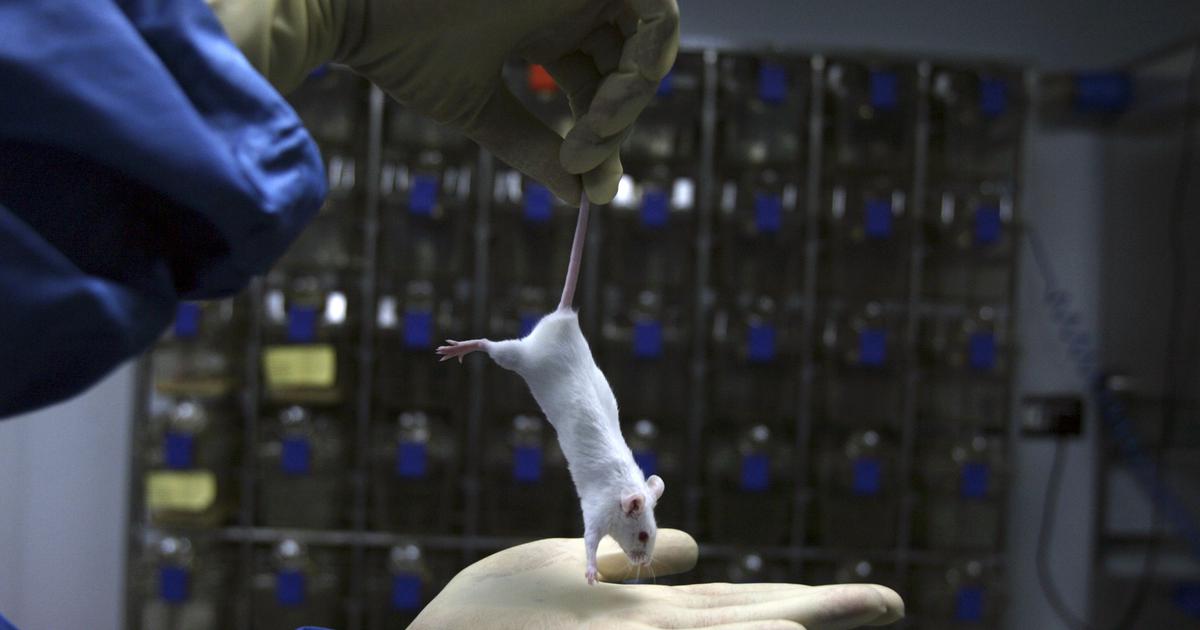
On October 6, the Centre notified the draft Prevention of Cruelty to Animals (Control and Supervision of Experiment, Breeding and Trading of Laboratory Animals) Rules, 2026 and gave the public 30 days to respond.
Through the same weeks, tens of thousands of people were on the streets against the Special Intensive Revision of electoral rolls, an exercise through which, by the Election Commission’s own count, more than 13 crore names have been struck off the draft rolls – women, the poor and Muslims disproportionately among them.
Then, on October 26, a sessions court in Kalol, Gujarat, sentenced three Muslim men to life imprisonment for cow slaughter, citing the Manusmriti and the Rigveda and warning that if such men went unpunished, the cow would one day vanish from the Earth.
Many in the animal rights movement, like some of our friends working on child rights, education, health and the environment, have always drawn strength from staying focused on the work ahead. But how long can we keep telling ourselves, while the country burns, that we will hold on to our tunnel focus on animal protection, and keep engaging the ministry, the courts and the consultation process as if their independence had never been called into question?
At some point, a single-issue politics has to admit that there is no winning a fair contest in a game that has been tilted against it from the start.
What ties these events together is a redefinition of what animal protection means to the Indian state. The people protesting against SIR are defending the right to have a say in how they are governed. We rely on that same democratic promise when we ask the state to honour its commitments to animals.
Indian law has always had a secular commitment, written into the Prevention of Cruelty to Animals Act, 1960 and into Article 51A(g) of the Indian Constitution, which asks every one of us to have compassion for living creatures, all of them, without ranking them by their sacredness.
Under the Bharatiya Janata Party-led National Democratic Alliance government, the secular commitment to protect animals is being steadily hollowed out in favour of deregulation, facilitation and trade, while the protection of one animal is made more punitive by the year.
The Kalol judgment rests on the Gujarat Animal Preservation (Amendment) Act, 2017, which raised the punishment for cow slaughter to a minimum of 10 years and a maximum of life, and the sentence has already been rightly questioned on grounds of both proportionality and secularism.
Animal protection in India is being moved from a secular project to a Hindutva one.
A decade of retreat
There has been an almost unnoticed, institutional retreat from the secular commitment of animal protection and rights.
Dilution of welfare institutions. In 2019, the Prevention of Cruelty to Animals Act was moved out of the environment ministry and handed to the Department of Animal Husbandry and Dairying, whose very business is the productive use of animals. The Animal Welfare Board of India, a statutory body, was shifted out of Chennai and now answers to that department.
Abandoning the promise to bar animals in circuses. The government drafted amendments to the Performing Animals (Registration) Rules in 2018 that would have barred all animals from circuses, on the repeated advice of the Animal Welfare Board, and then let them lapse. When animal rights organisation went to the Delhi High Court seeking the ban, the environment ministry asked to be dropped from the case on the grounds that it had “no role to play”.
Shelving the reform of the cruelty law. The Prevention of Cruelty to Animals (Amendment) Bill circulated for comment in 2022, which would finally have raised fines that remain embarrassingly low for most offences, has never reached Parliament.
Reopening captive elephant trade. The 2022 amendment to the Wildlife (Protection) Act allowed captive elephants to be transferred for “religious or any other purpose”, undoing protections that we had fought for over decades.
The draft experimentation rules are the latest, and perhaps the most consequential, step in the same direction.
All the while, the punishment for harming the cow has only grown. Compassion is negotiable whenever it stands in the way of commerce or convenience, and non-negotiable only where it serves a particular politics.
Animal experimentation in India
It has become common to treat opposition to animal experimentation as an obstacle put in the way of science by people who do not understand it. Our own history tells a different story.
When the laboratories first came to India, with the Imperial Bacteriological Laboratory at Poona in 1890 and the Pasteur Institute at Kasauli in 1900, they came hungry for animals. The historian Pratik Chakrabarti, in his study Beasts of Burden, records that producing a single rabies vaccine at one Pasteur institute needed 6,000 rabbits a year.
They were resisted, by a most unlikely alliance. On one side were British anti-vivisectionists, many of them women, like Frances Power Cobbe, who wrote to the Allahabad Pioneer in 1892 begging Indians not to countenance a Pasteur Institute “in our Queen’s dominions”, and Isabel Burton, who admired the pinjrapoles for giving animals “a refuge where, at least, no one can hurt them”.
On the other were Jain and Marwari merchants. Gulal Chand, Secretary of the Antivivisection Society of Calcutta, petitioned the government against “the most horrible cruelty” of the painful experiments, which he said was “so much shocking to the hearts specially of the Jains”.
As late as 1911, Khusru Tarachand wrote to the secretary of state that the deeds done in the Pasteur Institutes would be “infinitely more revolting to the Indian mind than mere greasing of cartridges with the fat of the cow and the swine”. He was told that “His Lordship sees no advantage to the public service in prolonging this correspondence.”
Mohandas Gandhi had come to the same question from the other side, through the vegetarian circles of London, where Henry Salt, the League’s founder, and the London Vegetarian Society shared their platforms with the campaign against vivisection. He carried that conviction home, calling vivisection “the blackest of all the black crimes that man is at present committing against God and his fair creation”, and insisting that “we should be able to refuse to live if the price of living be the torture of sentient beings”.
The colonial state, for its part, made its choice. In 1892, faced with the possibility of extending Britain’s vivisection law to India, it refused. Lord Elgin, who supported the establishment of the Pasteur Institute, called such a law “unnecessary and undesirable”, on the advice of scientists like EH Hankin, who assured the government that cruelty “might safely be left to their [Indians, natives] good taste and good feeling”. No animal experiment law was ever passed in British India.
Rukmini Devi Arundale took that critique into the Parliament of the new republic. Speaking in the Rajya Sabha on March 5, 1954, as she moved her Prevention of Cruelty to Animals Bill, she asked that “there should be no exports of animals for vivisection and also that vivisection should be abolished in India”.
Her arguments did not rest on sentimentality alone. She said, “the opinions of eminent doctors, not only of doctors who are anti-vivisectionists, but also of doctors who are vivisectionists”, and “they themselves have said that it is cruel”. She described today’s hypocrisy: “Because we are not always able to kill them owing, as we say, to the religious sentiments of our people, we catch them and send them to the laboratories where they have a fate even worse than death.”
Prime Minister Jawaharlal Nehru persuaded her to withdraw the bill by promising a committee, and the Committee for the Prevention of Cruelty to Animals, with Arundale as vice-chair, reported in 1957.
It was a committee of inquiry appointed by the government of India, through a resolution of the Ministry of Food and Agriculture dated August 16, 1954. It was a remarkable undertaking, in which a republic barely four years old set out to understand what a secular, progressive and modern animal protection law for India might look like.
Its 14 signatories brought together parliamentarians, doctors, scientists, a practitioner of Indian medicine and the government’s chief legislative draftsman, Gandhians like Kaka Kalelkar and NR Malkani alongside the Bombay physician MDD Gilder, and among them two women, Arundale and Lakshmi Menon, and the parliamentarian Ahmed Mohiuddin. It sent its questionnaire, in English and in Hindi, to more than 1,500 organisations and individuals, toured 13 cities and towns from Madras and Calcutta to Amritsar and Jaipur, examined 310 witnesses, and after nearly two and a half years of work produced a report of almost 400 pages on which the 1960 Act would be built.
The committee did not agree with everything the animal protection movement asked of it, but it is remarkable that the young republic should have held so careful and so consultative an enquiry about animals, nearly two decades before Peter Singer’s Animal Liberation, a foundational text that has served as a major intellectual catalyst for the animal rights movement, was published in 1975. Singer had nothing to say about Arundale or about this committee, and while long before animals were turned into weapons in our own politics, the forgotten role of the committee in itself, is worth remembering.
Reading its chapter on experimentation today is an eerie experience, because the arguments have barely changed. Scientists opposed “the imposition of any restrictions, legislative or otherwise”, warning that a law would “impede the progress of the little research work that is being done in the country”.
The committee accepted that experiments “cannot be eliminated at the present state of development in our society”. It had found animals properly cared for “only in the case of the first-rate institutions”; it predicted that experiments were “bound to increase to a large extent in the near future”; and it admitted, with an honesty our present regulators would do well to borrow, that “there is no method of knowing whether all the experiments that are being carried on in the country are really necessary, and whether there is no duplication in them”.
The committee sought a law under which experiments would “get reduced by progressive stages”, and for “special emphasis” on alternatives “in order to reduce progressively and ultimately eliminate the use of animals for purposes of experimentation”.
Arundale, in her separate note, went further: this was “not primarily a scientific question, except as regards utility; it is an ethical and social matter to be decided by the society as a whole”, and one which “cannot be left to experts”. That settlement, imperfect and negotiated, became Chapter IV on the experimentation of animals under the 1960 act.
The settlement held in some instances. The 1957 committee had found India exporting rhesus monkeys at “over a lakh” a year, mostly to the United States, and the numbers were “steadily increasing”. In 1978, when US President Jimmy Carter raised the matter of monkey exports with Prime Minister Morarji Desai, India refused to resume them.
In 2014, India banned the testing of cosmetics on animals and then the import of cosmetics tested on them. In 2023 the drug rules were amended to allow non-animal methods in place of animal tests. Whatever its failings, this is the record of a state that understood that preventing cruelty is the whole point of the law under which experiments are licensed, and that it was always free to say no.
Tipping the balance
Animal experimentation is a difficult question. In India, it has been shaped by a fragile balance between public opinion, the claims of scientific necessity, the growing possibility of substitution, and the prohibition of cruelty that is the reason the parent law exists at all.
The only honest test of any new framework is whether it tips that balance towards compassion or away from it.
Objections have already been raised, for instance, by animal rights organisation PETA India, Assam Congress leader Debabrata Saikia, students protesting in Pune, and in a close reading of the notification in MedBound Times.
I want to dwell on three.
The first is that under Draft Rule 11, experiments classified as mild or moderate, including those on dogs, cats, monkeys, horses, sheep and pigs, would no longer need the approval of the central committee at all. They would be cleared by the ethics committee of the very institution that wants to conduct them, a committee on which, as critics have pointed out, the institution’s own employees are in the majority.
It depends on who decides that a dog’s suffering is merely “moderate”. We have, in other words, come back to scientist EH Hankin’s faith in the good taste and good feeling of those who hold the scalpel, and at a time when that faith is hard to justify.
Animal welfare activist Gauri Maulekhi has recalled how a 2011 inspection of a medical institute in Uttarakhand found filthy cages, untreated injuries and missing records. As recently as July 2025, the Delhi High Court had to stop a private contract research laboratory from bringing in new animals after the central committee’s own inspection had backed the allegations of cruelty.
The second pertains to street animals. Draft Rule 5 has a general bar on using stray dogs and cats, and then allows exceptions on the say-so of “competent authorities” that the rules do not define. The Animal Birth Control Rules, 2023 say that the street dog will be sterilised, vaccinated and returned to the lane where it lives and is known and fed.
Under the draft, street dogs picked up for sterilisation or rounded up into a municipal shelter in the name of public safety could lawfully end up on a laboratory table instead. A rule framed under a law meant to prevent cruelty would make the most vulnerable of our companion animals available as experimental material, through an exception that does not even say who can grant it.
The third is the monkey. Draft Rule 6 permits specified experiments on primates, at exactly the moment when global demand for research monkeys, and the breeders and contract research organisations who profit from it, are hunting for new sources.
Arundale’s complaint about monkeys caught here and shipped to foreign laboratories has an uncomfortable ring to it once more. The draft does speak of replacement, reduction and refinement, but such words are only as strong as the burden they place on applicants to prove necessity, the scrutiny they give to alternatives and the conditions that can actually be enforced.
Where the 1957 committee asked the state to work its way out of dependence on animals, these rules make that dependence easier.
What the state should do
If the government is serious about reform, it should withdraw these rules and begin again, the way the young republic did. It should set up a representative parliamentary inquiry, and hear scientists, parliamentarians, ethicists, animal protection groups, industry and ordinary citizens at length, as the 1957 committee did.
It should hold a real public consultation, in the languages people speak and over a period that matches the seriousness of the question, not 30 days on a technical notification. It should go back to the people and discuss what Arundale rightly called “an ethical and social matter to be decided by the society as a whole”.
It should remind the state, the scientists, the industry and every one of us of our constitutional duty of compassion, and of a commitment that has guided our law since 1957: that we may only move forward, towards fewer animals in laboratories and eventually none, and never back.
The contrast with Kalol could not be starker. A state that will send men to prison for life in the name of one animal, while making it easier to confine, cut and kill dogs, monkeys and countless others in the name of research and trade, is not confused about animal protection. It has decided which animals matter to its politics – and why.
Compassion for animals cannot be built on a politics that chooses its animals by their religious significance and its offenders by their faith. It needs independent institutions that can scrutinise laboratories and governments alike, and a secular politics in which the duty we owe to living creatures is owed to all of them, and human and non-human.
There is an irony here that I cannot set aside. As this consultation closes, animal protection groups across the country are filing objections in good faith, in a process that assumes a listening state and a public with the right to be heard, even as the most basic instrument of that public’s voice, the vote, is being taken from crores of our fellow citizens.
A movement that depends so completely on the freedom to question official decisions cannot defend compassion for animals and stay silent about the democratic freedoms without which no such claim can ever be heard.
Alok Hisarwala Gupta is the founder of the Centre for Research on Animal Rights.
We welcome your comments at letters@scroll.in.Source: Scroll.in
Own this text or image and want it removed? Send a removal (DMCA) request — we act on valid requests promptly.
View the original at scroll.in