india
Delhi pre-Diwali pollution levels were highest in three years, study shows
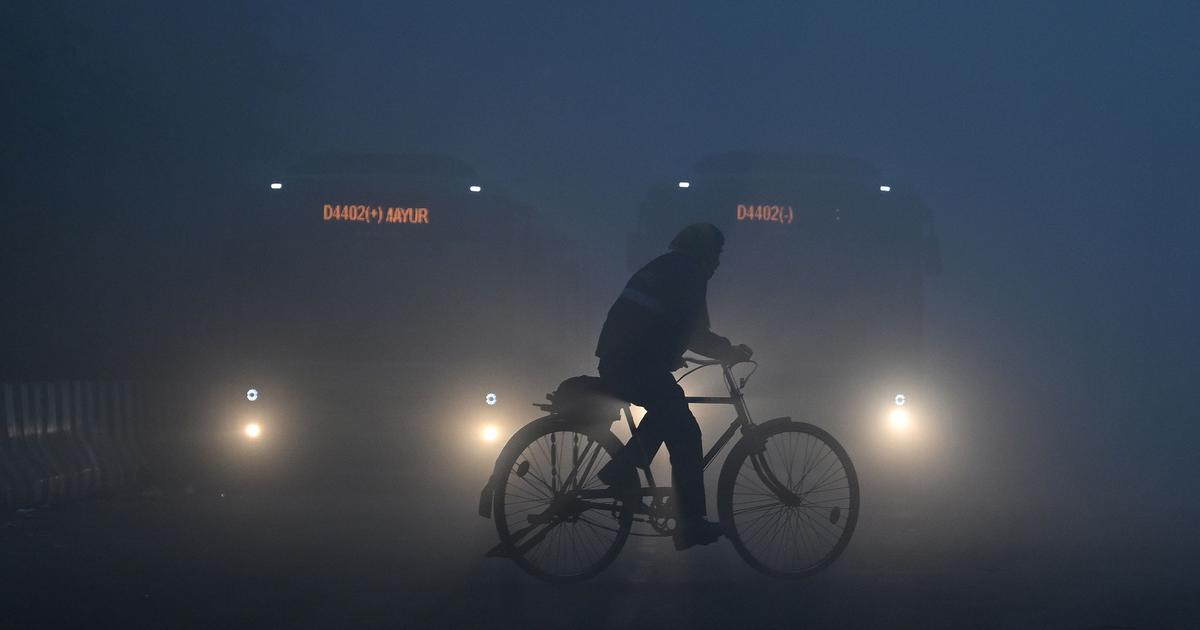
The average PM2.5 concentration in the week before the Hindu festival was 97% higher than in 2025.
Delhi’s air pollution levels ahead of Diwali were the worst in three years, showed an analysis by the Centre for Science and Environment released on Wednesday.
The average concentration of PM2.5, fine airborne particles that can penetrate deep into the lungs, was 97% higher in the week before Diwali this year than during the same period in 2025, according to the study.
The concentration of the tiny particulate matter stood at 236 micrograms per cubic metre in 2026, compared with 120 micrograms per cubic metre in 2025 and 179 micrograms per cubic metre in 2024.
Air quality deteriorates sharply in Delhi during the winter months. The city is often ranked among the world’s most polluted capitals.
The lighting of firecrackers during Diwali, along with stubble burning in Punjab and Haryana, vehicular pollution, falling temperatures, decreased wind speeds and emissions from industries and coal-fired plants contribute to the problem.
Pollution levels typically peak during and immediately after Diwali, when firecracker emissions add to the existing pollution load.
This year, Diwali was celebrated on Sunday, amid worsening air quality in the capital over the past few weeks.
Anumita Roychowdhury, executive director of research and advocacy at the Centre for Science and Environment, said that Diwali is an annual tipping point for pollution, but “elevated particulate levels before the festival this year show that the baseline pollution is higher than in previous years”.
Year-round measures to control emissions from key sources remained inadequate, she added.
“Had air quality been cleaner leading into winter, and episodic spikes from farm fires and firecrackers kept in check, seasonal weather shifts would not have triggered such severe pollution,” said Roychowdhury.
Vehicular emissions key cause
Delhi’s air quality has been deteriorating sharply from late October, with the air quality index entering the “very poor” category on November 2.
According to data from the Indian Institute of Tropical Meteorology’s Decision Support System, pollution transported from neighbouring National Capital Region districts accounted for more than half of Delhi’s PM2.5 pollution between November 1 and November 8 – which is the day Diwali was celebrated.
Local sources contributed 33%, while stubble burning accounted for 14.2%, said the Centre for Science and Environment in the study.
“Among Delhi’s local pollution sources, vehicular transport was the dominant polluter at 52%,” it added.
Also read: Delhi’s failure to act against the biggest source of its air pollution – vehicles
The contribution of stubble burning to Delhi’s pollution remained relatively low during much of this period.
“...severe pollution episodes persist independently of declining farm fires, driven instead by intense local emissions,” said the study.
Punjab: Over 1,200 FIRs against stubble burning
Meanwhile, the number of farm fires in Punjab rose to 5,517 by Wednesday, PTI quoted data provided by the state government as saying.
The data also showed that 1,259 first information reports had been registered in connection with farm fires under Section 223 of the Bharatiya Nyaya Sanhita, which pertains to disobedience of an order issued by a public servant.
What happens when clean air is something you have to buy?
We have been looking at air pollution beyond the smog.
At Scroll, we stay with a story and dig deeper and ask uncomfortable questions.
But we need your help to keep doing this.
Support us: https://t.co/QEgDxR0z1I pic.twitter.com/cIn4ViAV0Z
— Scroll.in (@scroll_in) November 9, 2026
Fines amounting to more than Rs 85 lakh have been imposed as environmental compensation in 1,695 cases. So far, of the total fine, over Rs 37 lakh has been recovered, the PTI reported.
Written by Tanya Shrivastava. Edited by Sneha.
Also read: How an El Niño winter could worsen pollution in Delhi
We welcome your comments at letters@scroll.in.Source: Scroll.in
Own this text or image and want it removed? Send a removal (DMCA) request — we act on valid requests promptly.
View the original at scroll.in