india
Delhi air quality in ‘severe’ category
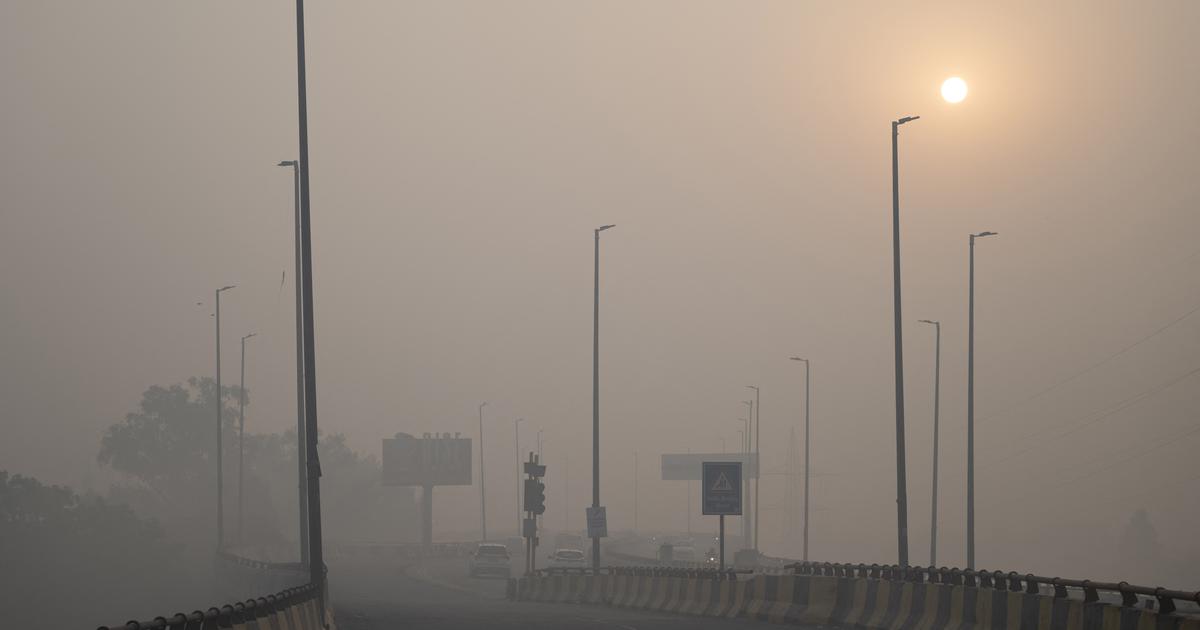
The average Air Quality Index in Delhi worsened to the “severe” category on Friday.
At 8.05 am, the average AQI in the national capital was 403, which is categorised as “severe”, according to data from the Sameer application, which provides hourly updates published by the Central Pollution Control Board.
Twenty-eight of the 58 active monitoring stations in the national capital recorded AQI levels above 400.
The reading at the Indian Institute Of Technology, Delhi, was the worst in the city at 488.
Private air quality monitors, which calculate the data differently, recorded an average AQI of 594 in the national capital at 7.30 am, which is categorised as “hazardous”.
In some parts of the city, such as southern Delhi’s Railway Colony, and Rameshwar Nagar and Samaypur in north Delhi, the AQI was above 800, showed data from AQI.in.
The average AQI in adjoining Noida was also “severe” at 474, showed data from the Central Pollution Control Board at 8.05 am.
Other cities near the capital recorded “very poor” air quality. The AQI in Gurugram was 352, Ghaziabad 369 and Greater Noida 351.
On Friday, 86 of the 100 most polluted cities globally were in India, showed data from AQI.in.
#WATCH | Delhi | Air Quality Index (AQI) around AIIMS is 418, categorised as 'Severe', as per the CPCB (Central Pollution Control Board).
(Visuals shot at 07:20 am) pic.twitter.com/iJp6sk2Kpm
— ANI (@ANI) November 13, 2026
According to the government standards, an index value between 0 and 50 indicates “good” air quality, between 51 and 100 indicates “satisfactory” air quality and between 101 and 200 indicates “moderate” air quality. As the index value increases further, air quality deteriorates. A value of 201 and 300 means “poor” air quality, while between 301 and 400 indicates “very poor” air.
Between 401 and 450 indicates “severe” air pollution, while anything above the 450 threshold is termed “severe plus”.
Air quality deteriorates sharply in the winter months in Delhi, which is often ranked the world’s most polluted capital. The lighting of firecrackers during Diwali along with stubble burning in Punjab and Haryana, vehicular pollution, falling temperatures, decreased wind speeds and emissions from industries and coal-fired plants contribute to the problem.
This year, Diwali was celebrated on Sunday. Peak air pollution levels are historically observed during and immediately after Diwali.
On November 6, the Commission for Air Quality Management imposed Stage 3 restrictions under the Graded Response Action Plan in Delhi and the National Capital Region as a precautionary measure after air quality deteriorated towards the “severe” category.
GRAP is a set of incremental anti-pollution measures that are triggered to prevent further worsening of air quality once it reaches a certain threshold in Delhi-NCR.
Stage 3 measures include a ban on non-essential construction work and the closure of stone crushers and mining activities, in addition to the measures already imposed under Stage 1 and Stage 2.
Written by Abeer Khan. Edited by Nachiket Deuskar.
Also read:
Source: Scroll.in
Own this text or image and want it removed? Send a removal (DMCA) request — we act on valid requests promptly.
View the original at scroll.in